
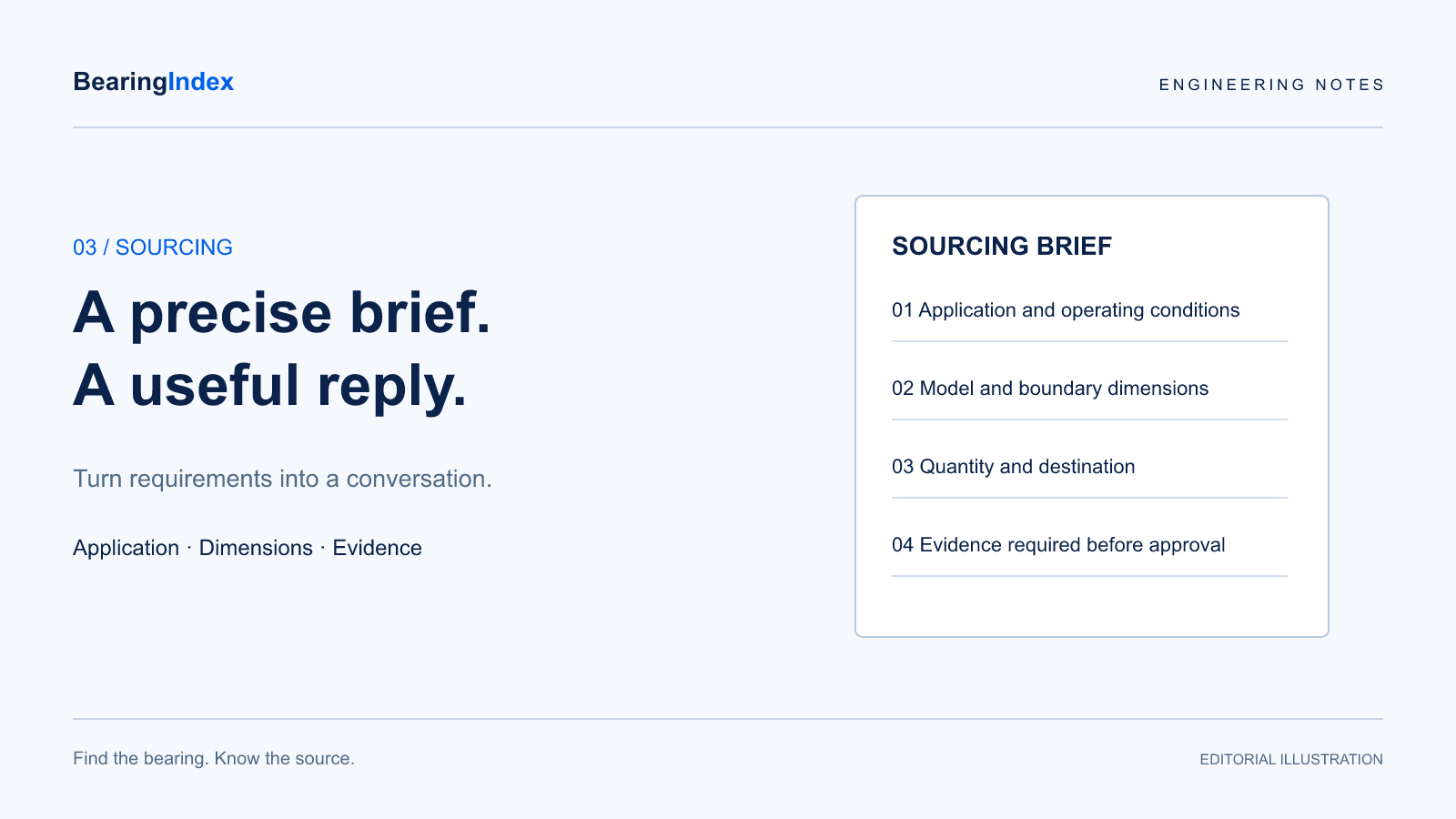
Identify the part and application
Start with the exact model when you have one. Otherwise describe the application and the documented dimensional constraints. Include the manufacturer and source for any reference part; do not assume that a similar model is an approved substitute.
Distinguish requirements from preferences
List the dimensions and technical properties that are mandatory, followed by preferences that may be discussed. If a requirement comes from a drawing or specification, identify its revision. Do not use a general material label when a component-specific requirement is needed.
State the commercial context
Provide the sample quantity, expected volume, destination and required date. These fields help the recipient understand the request; submitting an inquiry is not a purchase order and does not confirm availability, price or delivery.
Ask for bounded evidence
Ask for the documents relevant to your model or batch, such as dimensional results or traceability records, and state the question each document should answer. Avoid an unqualified request for a verified supplier when you need evidence about a specific product.
Keep conversations separate
Select up to four manufacturers. Each approved factory account receives its own conversation and cannot read other factories’ replies. An unclaimed manufacturer’s conversation stays pending platform handling until the company claim is approved. Attachments on the initial inquiry are shared with the selected manufacturers after access approval; a conversation attachment belongs to that conversation.
Review the reply
Check that the response addresses the exact model and requirements. Resolve unknown properties explicitly. Save a record of any agreed changes before moving to a separate procurement agreement.